Microcontrollers
Microcontrollers
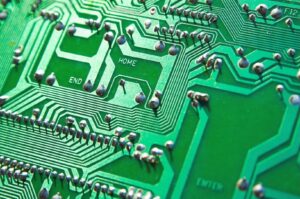
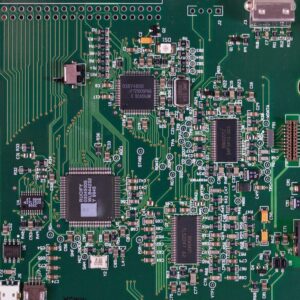
A microcontroller is a compact integrated circuit designed to govern a specific operation in an embedded system. It includes a processor, memory, and input/output peripherals on a single chip. Here are the key components and functions of a microcontroller:
- Processor (CPU): Executes instructions and processes data.
- Memory:
- RAM (Random Access Memory): Temporary storage for data and variables.
- ROM (Read-Only Memory): Stores the firmware or software program that runs the microcontroller.
- Flash Memory: Non-volatile memory used for storing the program code and other data.
- Input/Output (I/O) Ports: Interfaces for connecting the microcontroller to other devices, sensors, and actuators.
- Timers and Counters: Manage tasks like generating precise time delays, counting events, and generating PWM signals.
- Analog-to-Digital Converter (ADC): Converts analog signals from sensors into digital data.
- Digital-to-Analog Converter (DAC): Converts digital signals into analog output.
- Communication Interfaces: Enable communication with other devices using protocols such as UART, SPI, I2C, and CAN.
Applications
Microcontrollers are used in a wide variety of applications due to their versatility and low cost, including:
- Consumer Electronics: Appliances, remote controls, and toys.
- Automotive: Engine control systems, airbag controllers, and infotainment systems.
- Industrial Automation: Robotics, PLCs (Programmable Logic Controllers), and sensor systems.
- Medical Devices: Pacemakers, blood pressure monitors, and diagnostic equipment.
- Home Automation: Smart thermostats, security systems, and lighting controls.
Advantages
- Low Cost: Affordable for mass production and small projects.
- Low Power Consumption: Ideal for battery-operated devices.
- Compact Size: Suitable for space-constrained applications.
- Integrated Peripherals: Reduces the need for additional components and simplifies circuit design.
Examples
Popular microcontroller families include:
- AVR (by Atmel, now Microchip Technology): Widely used in Arduino boards.
- PIC (by Microchip Technology): Known for simplicity and wide range of applications.
- ARM Cortex-M (by ARM Holdings): Used in many high-performance applications.
- ESP (by Espressif Systems): Popular for IoT projects due to built-in Wi-Fi and Bluetooth capabilities.
Microcontrollers are fundamental in the design of embedded systems, providing the necessary intelligence to control devices and processes effectively.
Microcontrollers are used in a variety of audio and music applications to manage, process, and control sound. Here are some specific examples and functions:
Audio Signal Processing
- Digital Signal Processing (DSP): Some microcontrollers have built-in DSP capabilities, allowing them to handle audio signal processing tasks such as filtering, equalization, compression, and effects (e.g., reverb, delay).
- Sampling and Playback: Microcontrollers can sample audio signals using ADCs and play back audio using DACs. They can store audio samples in memory and reproduce them as needed.
- Synthesizers and Sound Generators: Microcontrollers can generate various waveforms (sine, square, triangle, sawtooth) and modulate these to create complex sounds for synthesizers.
Control and Interface
- MIDI Controllers: Microcontrollers can be used to build MIDI controllers, which send MIDI signals to other devices to control musical instruments, software, and effects.
- User Interface: They can manage user interfaces for audio equipment, such as buttons, knobs, touchscreens, and displays, to control volume, track selection, playback, and other functions.
- Wireless Connectivity: Many modern audio devices use microcontrollers for Bluetooth or Wi-Fi connectivity to stream audio wirelessly.
Audio Effects and Instruments
- Guitar Pedals: Digital guitar effects pedals often use microcontrollers to apply effects such as distortion, delay, and chorus to the guitar signal.
- Drum Machines: Microcontrollers can control the playback of drum samples and sequences, providing a compact and efficient solution for rhythm generation.
- Electronic Keyboards and Synthesizers: These instruments use microcontrollers to scan the keys, generate and modify sounds, and handle various control inputs (e.g., pitch bend, modulation wheel).
Audio Recording and Playback
- Portable Audio Recorders: Microcontrollers can manage the recording process, handling inputs from microphones, compressing audio, and storing it on memory cards.
- MP3 Players and Other Audio Players: They decode compressed audio files (like MP3, WAV, AAC) and manage playback, including handling user inputs for play, pause, skip, etc.
Smart Audio Devices
- Smart Speakers: Microcontrollers manage voice recognition, process audio commands, control playback, and enable connectivity with other smart home devices.
- Hearing Aids: Advanced hearing aids use microcontrollers to filter and amplify sound, adapt to different listening environments, and connect to smartphones for fine-tuning settings.
DIY and Custom Audio Projects
- Arduino Projects: Arduino microcontrollers are popular for creating custom audio and music projects, such as simple synthesizers, sound effects generators, and interactive installations.
- Open-Source Music Equipment: Many hobbyists and professionals use microcontrollers to build custom MIDI controllers, drum machines, and other music equipment, often sharing their designs with the open-source community.
Example Microcontrollers in Audio Applications
- Teensy: Known for its audio library and powerful processing capabilities, Teensy is often used in DIY audio projects.
- Arduino: Popular for educational purposes and simple audio projects.
- ESP32: Frequently used in IoT audio projects due to its built-in Wi-Fi and Bluetooth capabilities.
In summary, microcontrollers are integral to modern audio and music technology, providing the processing power, control, and connectivity needed to create, manipulate, and manage sound in innovative ways.