
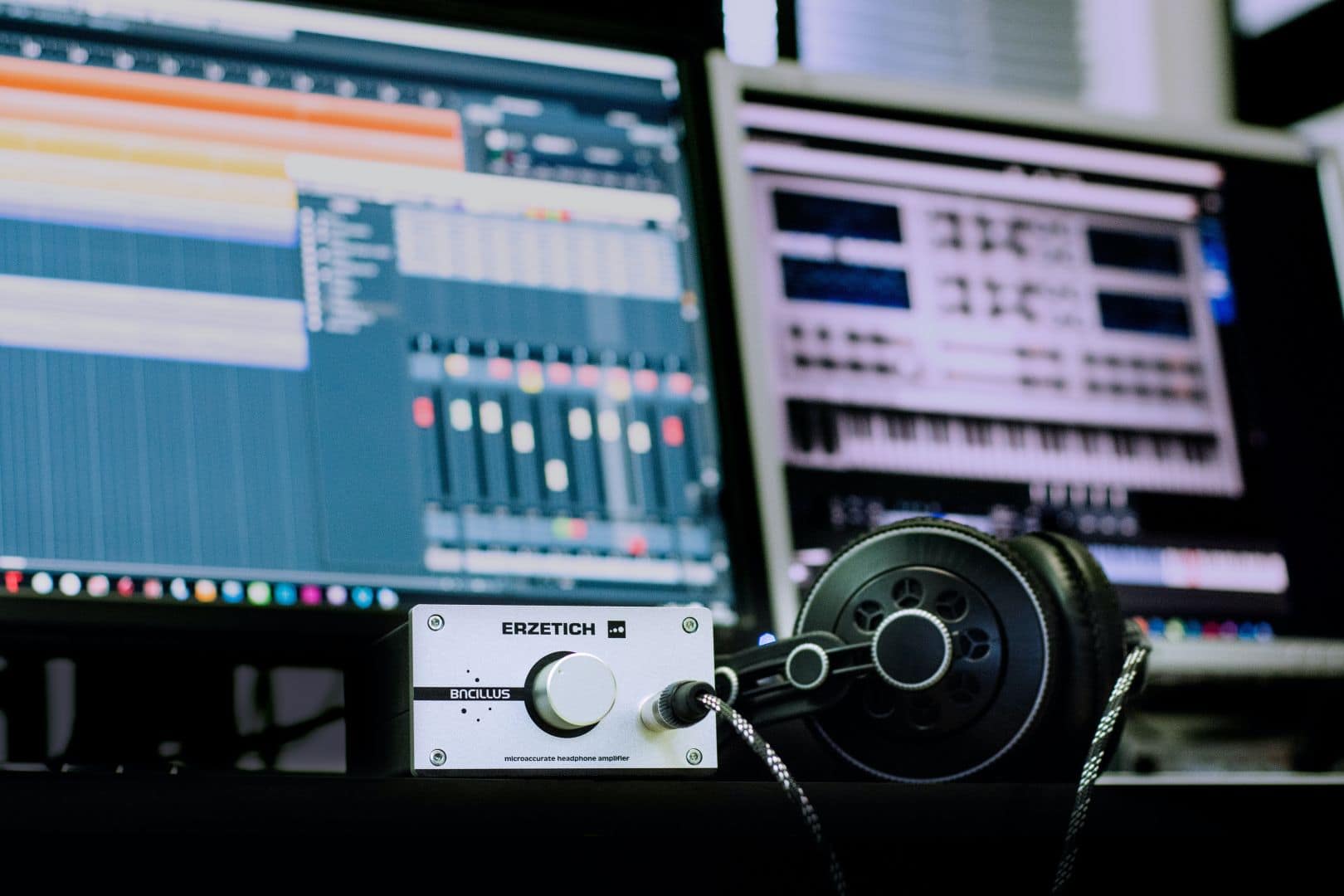
Introduction Software synthesizers (soft synths) are a type of virtual instrument that can be run entirely within a computer or mobile device without requiring any external hardware beyond a MIDI controller and/or audio interface. Since the early days of digital signal processing in the late 1970s, software synthesizers have evolved to become one of the most popular and widely used types of electronic musical instruments today.
In this article we will explore some of the key aspects and characteristics of software synthesizers including their history, different categories or subgenres within the field, the main components that make up a typical soft synth architecture such as oscillators, filters, amplifiers, envelopes, LFOs etc., how they work together to generate sound waves, what factors influence the final timbre color or ‘sound’ of a given virtual instrument, and finally some examples of popular software synths used in professional music production environments.
History
The first digital wave table synthesizers like the Fairlight CMI and Synclavier were introduced commercially in the early 1980s. These massive machines were essentially mini supercomputers that could generate an incredibly wide range of unique and complex sounds using a combination of sampled audio files, analog modeling techniques, and advanced algorithms for controlling pitch, timbre, amplitude over time etc.. They quickly gained popularity among top electronic musicians and producers who were looking to push the boundaries of what was possible in terms of sound design creativity.
In the mid-1990s, with the advent of faster processors, larger hard drives, and better graphics acceleration provided by Microsoft Windows 95 /98 and Apple’s Macintosh OS8 /9 operating systems respectively, software synthesizers began to emerge as a viable alternative to these expensive hardware solutions. Some notable examples from this period include Propellerhead Software’s ReBirth RB-338 drum machine emulator (1997), Arturia’s Moog Modular V virtual analog modular synth plugin (2000) and Native Instruments’ Komplete Audio 1 interface (2002) which introduced the concept of a dedicated audio interface specifically designed for low-latency, high-quality use with software instruments.
By around 2005-10, soft synths had become so advanced that many top studios started to phase out their hardware racks in favor of running everything virtually. This was largely driven by factors such as space constraints cost considerations maintenance issues etc., but also because many musicians and producers simply preferred the flexibility convenience portability and tactile interface offered by software instruments over traditional analog gear.
Today, it’s difficult to find a professional recording studio or home studio that doesn’t have at least one or more high-end soft synth plugins installed on their system(s). These can range from simple subtractive synthesizers like Roland Cloud’s Jun-6 VOX Continental V virtual analog synths which emulate classic 60s-80s designs such as the Roland Jupiter-8 Korg MS-20 Yamaha CS-80 etc., all the way up to highly advanced additive/subtractive hybrid instruments featuring hundreds of oscillators filters resonant cavities wavefolders ring modulators frequency shifter delay lines feedback loops etc… capable of generating an almost infinite variety of timbres textures colors moods atmosphere dynamics contrast progression development resolution form structure theme motif variation unity diversity repetition pattern change surprise anticipation expectation climax denouement resolution from deep subsonic basses to screeching lead tones and everything else in between including but not limited to percussive plucked bowed strummed resonant pitched filtered manipulated distorted glitchy noisey sounds effects textures timbres rhythms grooves patterns silhouettes outlines borders frames boundaries edges peripheries horizons infinitudes voids chasms abysses etc.,
Components and Sound Generation
A typical software synthesizer architecture consists of several key components that work together to generate sound waves:
-
Oscillators: These are the heart of any synthesizer. They produce the basic audio signal that will be shaped and processed by subsequent stages in order create more complex timbres textures colors moods atmosphere dynamics contrast progression development resolution form structure theme motif variation unity diversity repetition pattern change surprise anticipation expectation climax denouement resolution from simple sine waves to richly detailed orchestral sounds involving hundreds if not thousands of individual notes harmonics etc… Some popular oscillator waveforms include sawtooth square triangle pulse noise and various hybrid combinations thereof.
-
Filters: These are used to modify the timbre or tone coloration of an audio signal by selectively allowing certain frequencies while rejecting others. There are several different types including low-pass high-pass band-pass notch resonant shelving parametric etc., each with its own unique characteristics such as frequency response slope gain boost cutoff resonance Q peaking bell-like shape etc.. Filters can be used alone or in series/parallel configurations to create more complex frequency responses.
-
Amplifiers: These control the overall volume level of an audio signal. They typically consist of a voltage-controlled amplifier (VCA) which adjusts its output based on an external control signal such as an envelope generator LFO keyboard velocity etc…
-
Envelopes: An envelope is used to control the amplitude or loudness of a sound over time. It usually consists of four main stages including attack decay sustain release where:
- Attack refers to how quickly an envelope begins to ramp up after being triggered by some external event such as playing a key on a keyboard controller etc.
- Decay specifies how rapidly an envelope decreases its output once it reaches its maximum value during the attack phase
- Sustain determines what level of amplitude is maintained for as long as a note continues being held down or sustained after initial decay has occurred
- Release defines how quickly an envelope returns to silence after all notes have been released and sustain stage has ended
-
LFOs (Low Frequency Oscillators): These generate continuous waveforms whose frequencies are much slower than those typically used in oscillators, usually ranging from a fraction of Hz up into tens or even hundreds per second depending upon specific implementation. Common applications include creating subtle vibrato tremolo pitch bends rhythmic modulations etc… that add movement interest texture emotionality dynamics expressionism to otherwise static melodies basslines drum patterns chord progressions etc…
-
Effects: These are used to further modify and enhance the sound of an audio signal after it has been processed by all other stages within a synthesizer. Common effects include reverb delay echo distortion compression limiting phasing flanging chorus ring modulation frequency shifting pitch shifting tremolo vibrato noise reduction EQing etc… Some software synths offer extensive collections of built-in effect processors while others may require separate plugins or hardware units to be used in conjunction with them.
Summary
In conclusion, software synthesizers have come a long way since their humble beginnings as simple drum machine emulators. Today’s top soft synth plugins are capable of producing an incredible array of authentic and highly realistic emulations of classic analog synths like the Moog Minimoog Roland Jupiter-8 Korg MS-20 Yamaha CS-80 etc., while also providing access to entirely new sonic landscapes that were previously unimaginable even with the most advanced digital hardware solutions available at the time. Whether you’re an electronic musician producer DJ sound designer composer arranger or simply a music enthusiast looking for ways to enhance your creativity and productivity, there’s no denying that software synthesizers are one of the most powerful tools in any audio professional’s toolkit.